
PGRLabs.com

Peptide Research

Peptide Research

TB-500 (Thymosin Beta-4): A Research Overview

Introduction TB-500, also known as Thymosin Beta-4, is a synthetic peptide widely studied for its potential role in cellular regeneration and tissue repair. As researchers continue exploring bioactive compounds, TB-500 has become a focal point for investigations into wound healing, cell migration, and recovery mechanisms. At PGR Labs, we provide TB-500 strictly for research and analytical purposes, ensuring high purity and reliable quality for lab applications. What is TB-500? TB-500 is a synthetic version of a naturally occurring peptide, thymosin beta-4, found in nearly all human and animal cells. Its biological relevance stems from its interaction with actin, a protein critical for cell structure and movement. By modulating actin-binding, TB-500 has been studied for its role in processes like: Research Applications While not approved for human use, TB-500 is an important subject in preclinical research. Studies have investigated its effects on: All findings to date remain confined to laboratory and animal studies and should not be interpreted as medical advice or endorsement for human use. Handling & Storage for Research Disclaimer TB-500 from PGR Labs is intended strictly for research purposes only. It is not for human consumption or use in clinical, diagnostic, or therapeutic applications. To purchase, go here.
Peptide Research

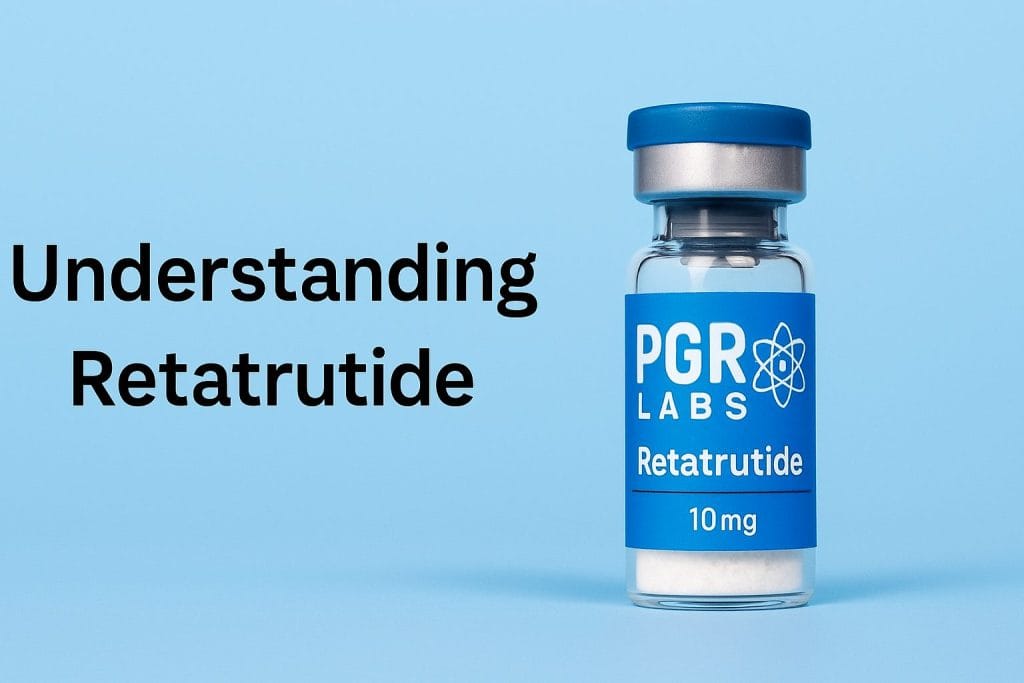
Retatrutide Research Peptide: Inside the Research on This GLP‑1/GIP Dual Agonist

When it comes to cutting‑edge peptide research, few compounds are drawing as much attention as Retatrutide. Known for its dual activity at GLP‑1 and GIP receptors, this synthetic peptide is opening new doors for scientists exploring metabolic and endocrine pathways. At PGR Labs, we specialize in supplying high‑purity RTR-5 & RTR-10 research peptide for research teams and laboratories — ensuring every vial meets rigorous quality standards and is intended strictly for research use only. What Is Retatrutide? Retatrutide belongs to a class of incretin mimetics that interact with two key receptors: glucagon-like peptide-1 (GLP‑1) and glucose-dependent insulinotropic polypeptide (GIP). While single‑pathway agonists have been studied for years, dual agonists like Retatrutide are a newer frontier, giving researchers a tool to examine multi-pathway signaling in energy and glucose regulation. Early animal and preclinical studies have highlighted its potential to influence insulin secretion, satiety signals, and overall metabolic activity — but these findings remain firmly in the research realm. No therapeutic or human-use claims are made or implied by PGR Labs. The dual‑agonist mechanism of Retatrutide allows for a broader metabolic profile than traditional GLP‑1‑only peptides. This has prompted studies into: • Energy balance and metabolic pathways• Insulin signaling and glucose utilization• Comparative studies vs. single‑pathway analogs These investigations are purely academic, helping scientists better understand how incretin systems interact in complex metabolic networks. Every vial of RTR from PGR Labs is: For best results in laboratory settings, RTR-5 & RTR-10 should be stored in a cool, dry place away from light. Long‑term storage may require refrigeration or freezing. PGR Labs operates exclusively as a chemical supplier. Our peptides are intended for laboratory use only — not for human consumption, diagnostic, or therapeutic purposes. COAs (Certificates of Analysis) are available upon request for transparency and reproducibility. Interested in learning more? Purchase here.

Scroll to Top